
Inside the CSID Atlas Working Group
The goal of the CSID Atlas Working Group is to build a shared, global picture of climate-sensitive infectious diseases. Bringing together expertise from public health, epidemiology, climate science, data science, and all related disciplines, our group is working on identifying diseases that are climate-sensitive, and highlight where important knowledge and monitoring gaps remain. Our ultimate goal is the creation of a centralized definition of CSID and a corresponding Atlas, an interactive resource designed to visualize climate-sensitive infectious diseases around the world.
What exactly is a climate-sensitive infectious disease?
A simple question, but a complicated one to answer. This quarter, our team engaged with experts across disciplines and countries from Germany, Nigeria, and Kenya, bringing lived experiences and local knowledge to our progress of developing a CSID definition and the Atlas. In our efforts, we came to a realization that one sentence isn’t sufficient to define CSID. Given its complexities and layers of pathways that climate influences, developing a practical and operational definition that integrates these multi-layered pathways is critical toward understanding and addressing the health impacts of a changing climate.
Refining our CSID Atlas
We also updated the CSID Atlas prototype to align with the disease definition; a framework developed iteratively since our inception. Beyond mapping CSID members and their research expertise across the world, we are adding to our Atlas disease registry. The Atlas now incorporates the CSID definition itself, our disease inclusion decision rules, and a supporting glossary. To date, 15 diseases have been evaluated against these criteria, with detailed inclusion rationale provided for each. By valuing both scientific evidence and community perspectives, the Atlas aims to provide a more inclusive understanding of climate-sensitive disease risks.
Efforts Outside our 5-member Working Group
At the regional meetings in Thailand, Kenya, and Bangladesh, we shared our work with the CSID Network at large. We appreciate everyone’s time in listening and providing feedback to our progress. Below are pictures of our members presenting.
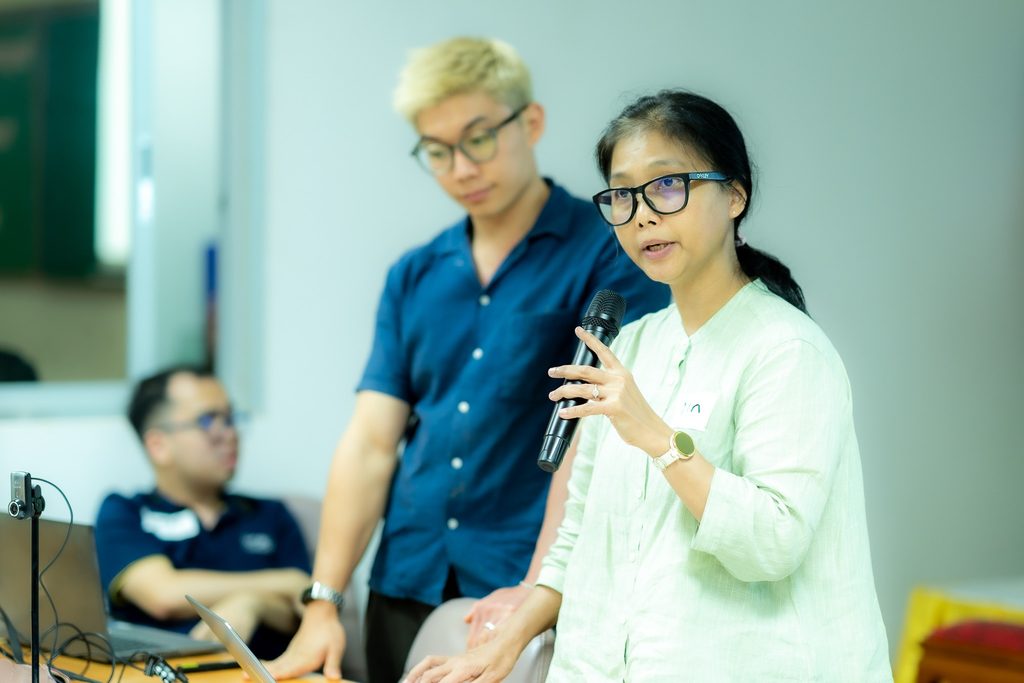
Lin Myat and Phong Hong showcased preliminary work at Regional CSIDNet Meeting in Thailand
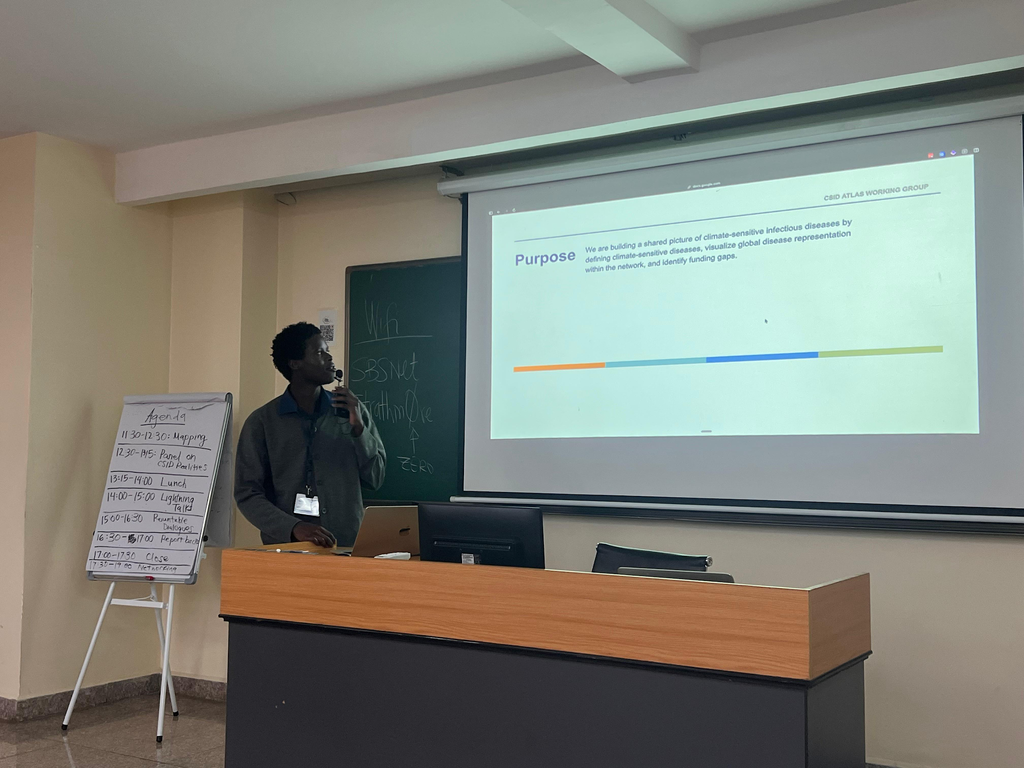
Several weeks later, Gerald Odhiambo presented at Regional CSIDNet Meeting in Kenya
Next Steps
As we approach the end of our first year together, we look forward to finalizing our definition and Atlas prototype. Centering sustainability in our work, we want to ensure that our work continues to live beyond the initial 12 months. We look forward to building on this foundation as we move from prototyping to operationalizing, transforming our ideas into resources for both CSIDNet members and global CSID actors.