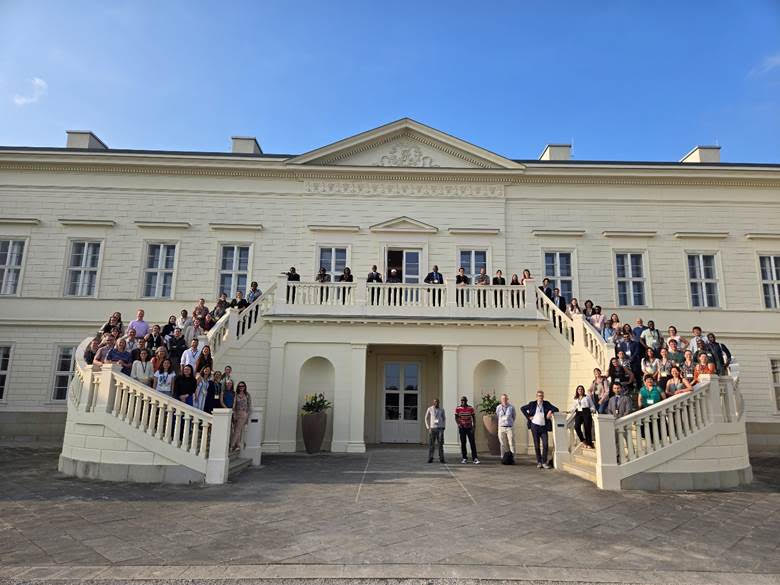
Building the Field of Climate and Health: Keystone Symposium 2025
Angela Okune
Earlier this year, members of CSIDNet attended the Keystone Symposium on Climate Change & Infectious Disease Threats, a scientific conference in Hannover, Germany, focused on how shifting climate patterns are reshaping the landscape of infectious diseases. We shared a brief update on CSIDNet’s contributions to the event from the perspective of our fellow, and in this post, we want to take a step back and reflect on what the discussions revealed and where CSIDNet can play a role in shaping the field.
The Promise and Challenge of Transdisciplinary Work
Founded in 1972, Keystone Symposia has convened scientific meetings for over 50 years, most focused on disciplines like immunology or virology. This year’s Symposium was different: one of the first Keystone meetings to be explicitly transdisciplinary, bringing together researchers spanning a wide range of disciplines and working at the intersection of climate change and infectious diseases.
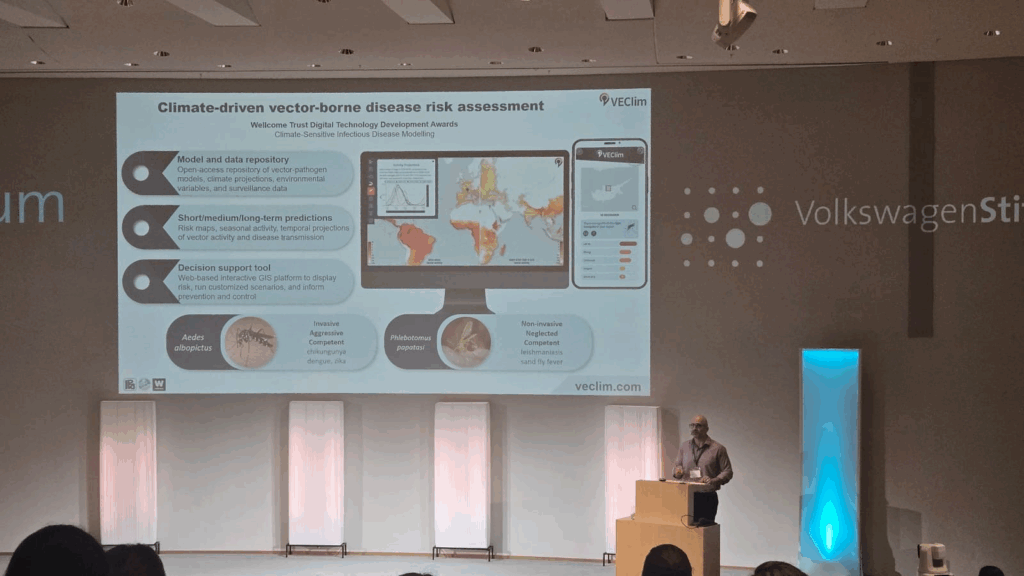
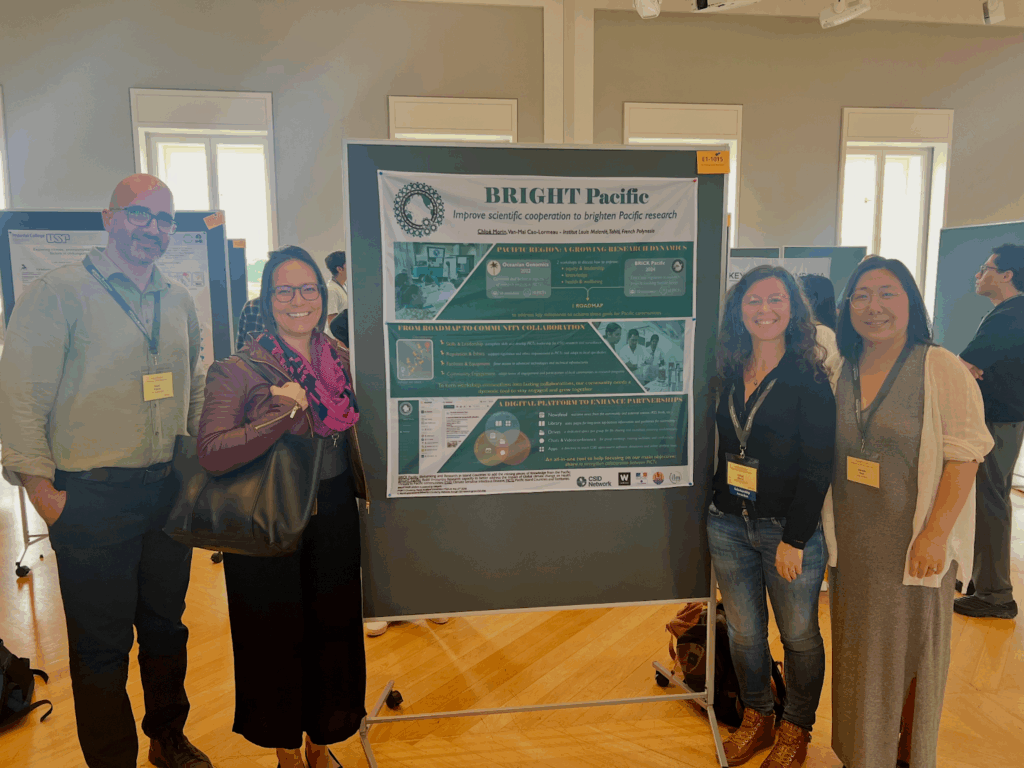
The Network was represented by CSIDNet fellow Chloé Morin, Collaborative Committee member Junwen Guo and CSIDNet staff Ragıp Zık and Angela Okune. Network member Kamil Erguler was also in attendance. In addition to a pre-conference meeting to learn about the progress of Chloé’s fellowship and Junwen’s experience of committee work, the small CSIDNet delegation participated in the intimate conference from June 24 – 27th, which gathered approximately 75 researchers. Chloé and Kamil presented their projects as part of the scientific sessions and Chloé also presented a poster on her efforts to improve scientific cooperation across Pacific Island Countries and Territories.
As many speakers noted over the three-day conference, collaboration isn’t as simple as putting different disciplines in the same room. Each field brings its own vocabulary, frameworks, and habits, making it challenging to establish shared understanding. Even traditional conference formats (long presentations with limited interaction) don’t always foster the dialogue and co-creation needed for this work.
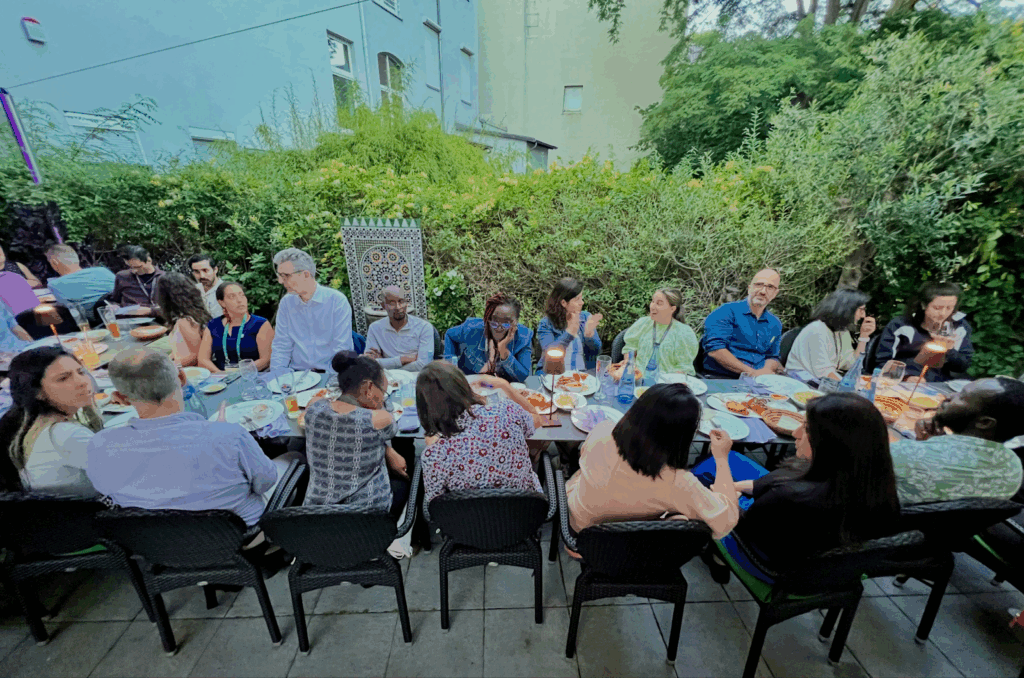
To succeed, researchers must approach this space with patience, openness, and clear communication about why their work matters. With this in mind, CSIDNet hosted a relaxed networking dinner alongside the formal sessions, gathering about 25 participants at a casual Syrian restaurant in Hannover. The warm evening was buzzing with energy as researchers from across continents and disciplines connected–exactly the kind of relationship-building CSIDNet sees as vital for advancing the field.
Climate and Health: A Field Coming Into Its Own
For much of the past two decades, the relationship between climate and health has been acknowledged but not systematically addressed. In the early 2010s, there was little interface between the climate science and health communities. Researchers worked in parallel, often using different data systems and timelines, which limited their ability to see how climate variability influenced disease dynamics.
The launch of the Sustainable Development Goals (SDGs) in 2015 was a turning point, explicitly naming climate as a global priority. This created a more supportive policy environment for collaboration, but it has taken nearly a decade for tools, partnerships, and funding strategies to catch up.
At Keystone, participants shared exciting progress. New systems like ENACTS now provide high-resolution, temporally structured climate data tailored to the needs of the health community. These tools make it possible to track climate trends over time and better align disease prediction and intervention planning.
As Madeleine Thomson, Head of Climate Impacts at Wellcome Trust, emphasized:
“Even the most brilliant modeling will have little impact if the people it was designed for aren’t actively involved in the process.”
This insight reflects a broader shift: climate and health work is most effective when end-users and local communities are co-creators, not just recipients of information.
The Next Frontier: Aggregating the Evidence
Despite this progress, there is still variation in how explicitly organizations include climate in their health strategies. Some funders and research institutions are deeply engaged in climate-health integration, while others are keen to better understand the role they can play to support the growth of the field. As extreme weather events and long-term climatic change increasingly shape disease risks, the need for clarity is growing. The field now faces a critical task: synthesizing scattered research to clearly demonstrate the links between climate and health. This kind of synthesis will help funders and policymakers see where to focus resources and take coordinated action.
The Keystone Symposium played a key role in surfacing emerging evidence and CSID Network will help sustain the momentum between and across events. We hope to ensure that the breakthroughs and relationships forged at meetings like Keystone continue to grow and ultimately translate into collective action.